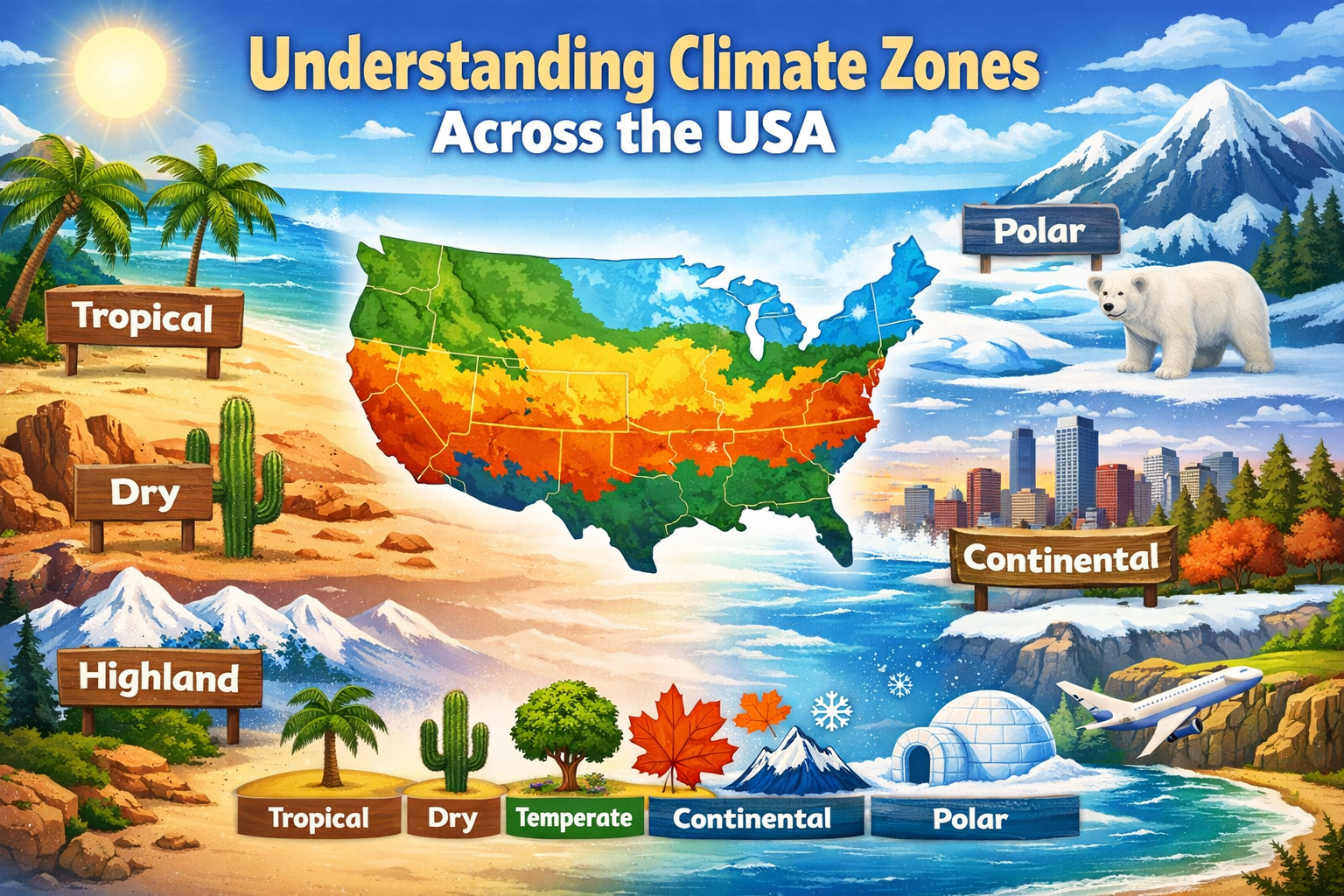
The United States is a vast country with a wide range of landscapes—from snowy mountains and dry deserts to humid coasts and tropical islands. Because of this diversity, the USA is divided into several climate zones, each with its own weather patterns, temperatures, and seasonal changes.
This simple guide will help you understand these climate zones in an easy and practical way.
🌎 What Are Climate Zones?
Climate zones are regions that share similar weather patterns over a long period of time. These patterns include:
- Temperature (hot, cold, mild)
- Rainfall (dry or wet)
- Seasonal changes (winter, summer, etc.)
Scientists use systems like the Köppen Climate Classification to categorize climates, but we’ll keep things simple here.
🗺️ Main Climate Zones in the USA
1. Tropical Climate (Hot & Humid All Year)

Where:
- Southern Florida (especially the Florida Keys)
- Hawaii
What it’s like:
- Warm temperatures all year
- High humidity
- Frequent rain showers
Best for:
- Beach lovers
- Tropical vacations
2. Dry Climate (Desert & Semi-Arid)

Where:
- Arizona, Nevada, Utah, New Mexico
- Parts of California
What it’s like:
- Very little rainfall
- Hot days, cooler nights
- Sparse vegetation
Types:
- Desert: Extremely dry (e.g., Phoenix, Las Vegas)
- Semi-arid: Slightly more rain (grasslands)
3. Temperate Climate (Mild & Comfortable)

Where:
- West Coast (California, Oregon, Washington)
What it’s like:
- Mild winters and summers
- Moderate rainfall (especially in the Pacific Northwest)
- Coastal breezes
Fun fact:
Cities like San Francisco rarely get extremely hot or cold.
4. Continental Climate (Hot Summers, Cold Winters)

Where:
- Midwest and Northeast (e.g., Chicago, New York, Minnesota)
What it’s like:
- Four distinct seasons
- Hot summers
- Cold, snowy winters
Best known for:
- Beautiful fall foliage 🍂
- Snowy winters ❄️
5. Polar Climate (Very Cold)

Where:
- Northern Alaska
What it’s like:
- Extremely cold most of the year
- Long winters
- Short, cool summers
Landscape:
- Ice, snow, and tundra
6. Highland Climate (Mountains & Elevation)

Where:
- Rocky Mountains
- Appalachian Mountains
What it’s like:
- Climate changes with altitude
- Cooler temperatures at higher elevations
- Snow in winter
Unique feature:
You can experience different climates just by going up or down a mountain.
🌦️ Why Climate Zones Matter
Understanding climate zones helps with:
- Travel planning – knowing what to pack
- Agriculture – what crops can grow
- Lifestyle choices – where to live
- Weather preparedness – dealing with storms, heat, or snow
🧭 Quick Summary
| Climate Zone | Key Features | Main Areas |
|---|---|---|
| Tropical | Hot, humid, rainy | Florida, Hawaii |
| Dry | Very little rain, hot | Southwest USA |
| Temperate | Mild weather | West Coast |
| Continental | Hot summers, cold winters | Midwest & Northeast |
| Polar | Extremely cold | Alaska |
| Highland | Varies with elevation | Mountain regions |
✍️ Final Thoughts
The United States is one of the most climatically diverse countries in the world. Whether you prefer sunny beaches, snowy winters, or cool mountain air, there’s a climate zone for everyone.
Understanding these zones not only makes geography easier to learn but also helps you better appreciate how weather shapes everyday life across the country.