Urban sprawl is one of the most significant patterns of modern city growth, especially in large metropolitan areas. It affects how people live, commute, and interact with their environment. One of the most well-known examples of urban sprawl can be seen in Los Angeles, a city that has expanded far beyond its original boundaries over the past century.
This article explains what urban sprawl is, why it happens, and how Los Angeles became a textbook example of this phenomenon.
What Is Urban Sprawl?
Urban sprawl refers to the uncontrolled expansion of cities into surrounding rural or undeveloped land. Instead of growing upward (with taller buildings and dense populations), cities spread outward, covering more land with:
- Housing developments
- Roads and highways
- Shopping centers
- Industrial areas
This type of growth is usually low-density, meaning fewer people live per square mile compared to dense urban centers.
Key Characteristics of Urban Sprawl
Urban sprawl typically includes:
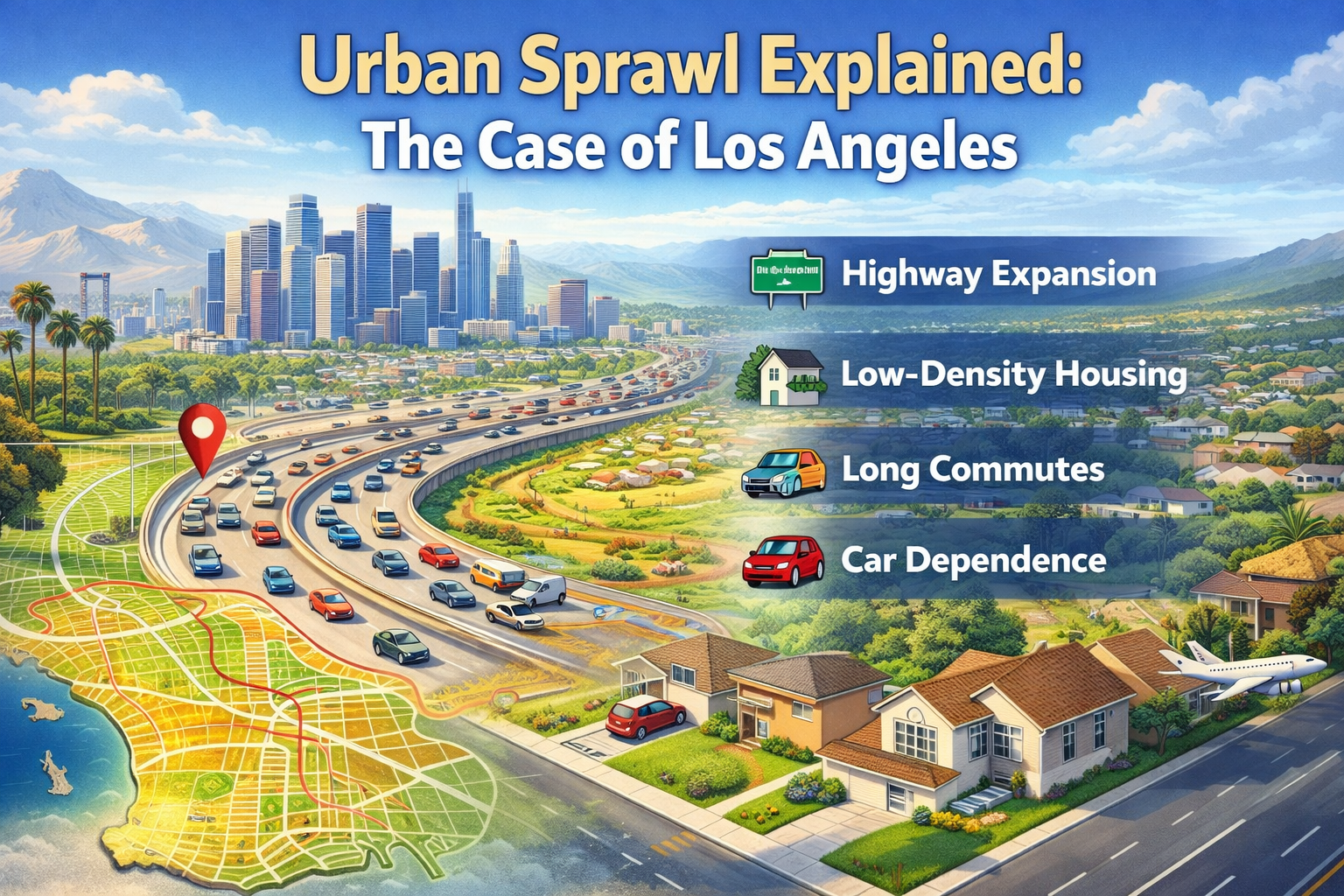
- Low-density housing (single-family homes with yards)
- Car dependency (limited public transport)
- Separated land use (homes, jobs, and shops are far apart)
- Expansion into rural land
- Long commuting distances
Los Angeles perfectly reflects all of these characteristics.
The Growth of Los Angeles
Early Development
In the early 20th century, Los Angeles was a relatively small city. However, several factors fueled its rapid expansion:
- The rise of the automobile
- Expansion of highways
- Affordable land on the outskirts
- Population growth due to job opportunities
Unlike older cities such as New York City, which developed around public transportation, Los Angeles grew during the age of cars.
The Role of Automobiles
Cars played a central role in shaping Los Angeles. As automobile ownership increased, people no longer needed to live close to their workplaces.
This led to:
- Suburbs spreading outward
- Increased highway construction
- Decline of public transit systems
Today, Los Angeles is known for its heavy traffic and reliance on cars.
Why Did Urban Sprawl Happen in Los Angeles?
Several key factors contributed to the city’s sprawl:
1. Abundant Land
Southern California had vast open land available for development, making outward expansion easier than building upward.
2. Highway System
The development of major freeways connected distant areas to the city center, encouraging people to live farther away.
3. Zoning Laws
Zoning policies often separated residential, commercial, and industrial areas. This increased distances between homes, workplaces, and services.
4. The American Dream
Many people preferred suburban living, with larger homes, private yards, and quieter neighborhoods.
Impacts of Urban Sprawl
Urban sprawl has both advantages and disadvantages. In Los Angeles, its effects are clearly visible.
✅ Positive Effects
- More affordable housing options outside the city center
- Increased home ownership
- Less overcrowding in central areas
- Access to suburban lifestyles
❌ Negative Effects
1. Traffic Congestion
Long distances between home and work lead to heavy traffic and long commute times.
2. Environmental Damage
Sprawl contributes to air pollution, habitat destruction, and increased carbon emissions.
3. Loss of Open Space
Farmland and natural landscapes are replaced by buildings and roads.
4. Infrastructure Costs
Expanding roads, utilities, and services over large areas is expensive.
Urban Sprawl vs. Smart Growth
In response to sprawl, urban planners promote smart growth, which focuses on:
- Higher-density housing
- Walkable neighborhoods
- Public transportation
- Mixed-use development (living, working, shopping nearby)
Cities across the United States are now trying to balance growth with sustainability.
Is Los Angeles Changing?
In recent years, Los Angeles has started addressing the challenges of urban sprawl by:
- Expanding public transit systems
- Encouraging apartment living in urban areas
- Promoting environmentally friendly development
While the city remains spread out, efforts are being made to create a more sustainable future.
Final Thoughts
Urban sprawl is a defining feature of modern cities, and Los Angeles stands as one of the clearest examples of how it develops and impacts daily life.
Understanding urban sprawl helps us see the trade-offs between space, convenience, and sustainability. As cities continue to grow, finding smarter ways to develop will be essential for improving quality of life and protecting the environment.